

Before and After
On renovation, upheaval, and the long middle

Home is charged for all of us, I think. It’s harbor, refuge, mirror, longing. But for me it has always carried an added weight. I grew up in foster care, in other people’s houses, and so the idea of home was never straightforward. It was something fragile and shifting, sometimes dangerously so. In adulthood, creating a home of my own has been one of the clearest ways I’ve claimed a life that feels steadier, warmer, and more fully mine.
In December, just before the launch of Skylark, I moved to Madison, Wisconsin, to be near family. I bought a 1920 center-hall Colonial with good bones, beautiful light, and tremendous potential. It also needed a staggering amount of work.
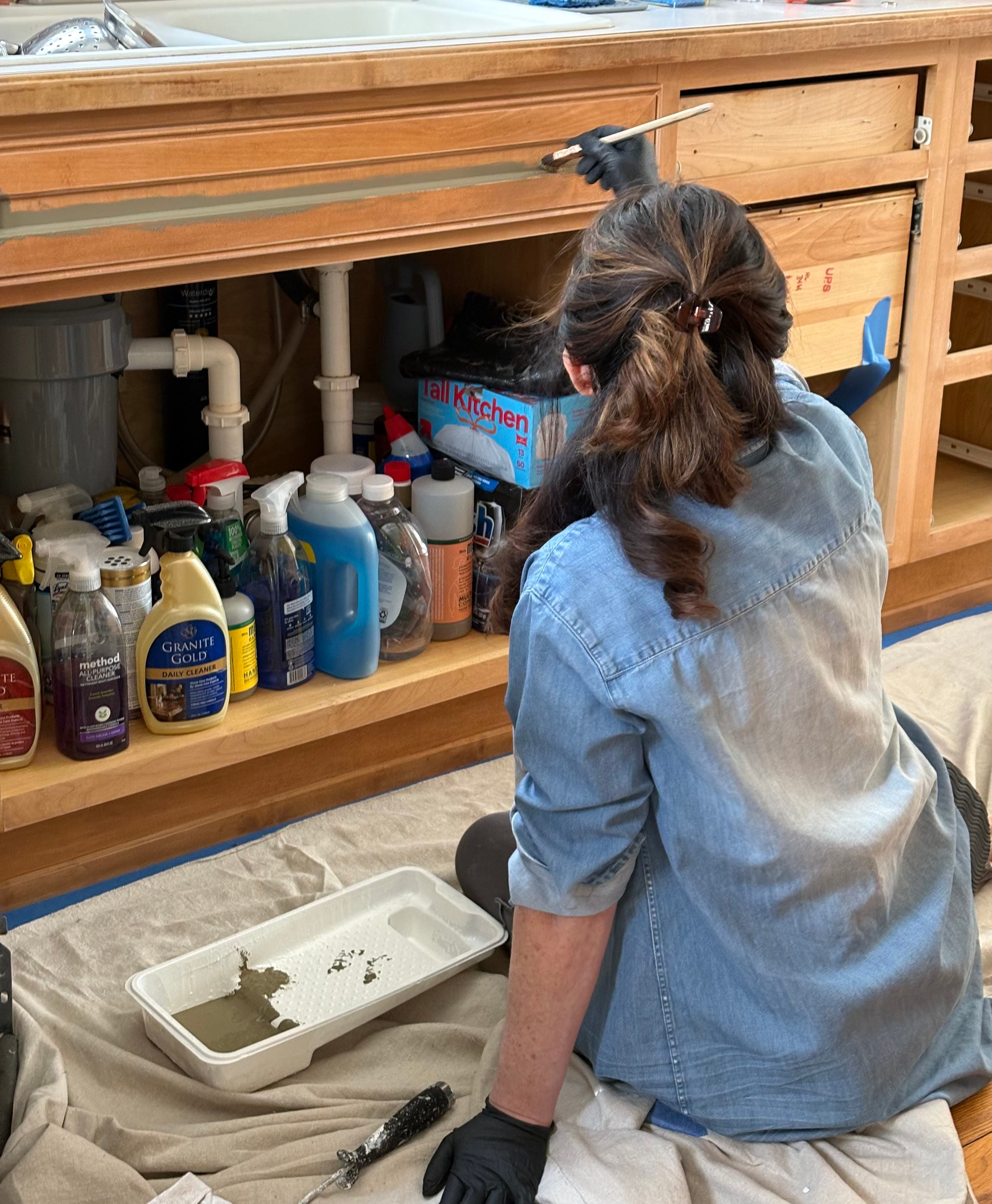
I have always been in love with houses as lived spaces, expressive spaces. As extensions of the inner life. I love decorating. I love poring over books by designers whose rooms feel storied and calm and inevitable. I love the small alchemy of moving a lamp, hanging art, or choosing a paint color, and feeling a room come into focus around that choice. To have that freedom now, under my own roof, still feels quietly miraculous—something I don’t take for granted.
What I had never done before, though, was love a house that asked so much in return. That demanded time, labor, patience, and mountains of faith.
There is a fantasy version of renovation, and most of us know it well by now. It lives on Instagram, where the “before” is drab but tolerable, and the “after” is dazzling: luminous kitchen, romantic sconces, perfect tile, a vase of sculpturally arranged branches on a creamy marble counter. The transformation appears swift and coherent, almost magical. What gets blurred, sped through, or skipped altogether is the middle.
But the middle is the whole story.
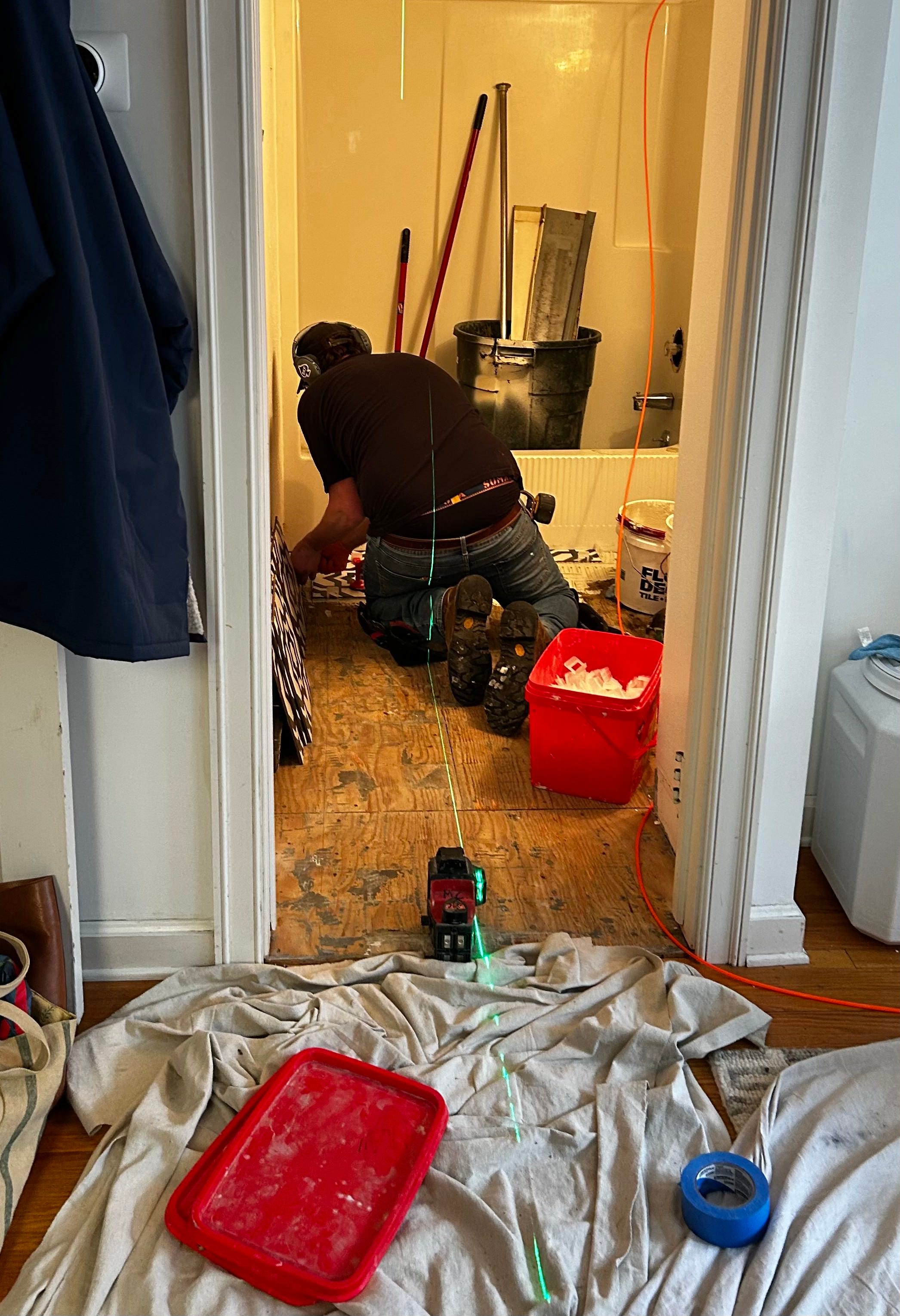
The middle is painter’s tarps in every room. Dust covering every surface no matter how often you wipe it away. Exposed outlets and wiring. Half-finished walls exuding paint fumes. Half-finished rooms stuck that way for weeks on end while my contractor is busy elsewhere. It’s eating dinner surrounded by screwdrivers and putty knives. It’s discovering that every project opens the door to three more.
I have found this kind of chaos challenging on more than a practical level. I like order. I like coherence. When my home is in disarray, I feel it in my nervous system. Maybe that’s true for many people, but for me it has old roots. Home has never meant only shelter. It has meant hard-won safety, coherence, peace. There were many days this winter when I wondered whether I had made a terrible mistake—not just because of the money or the mess, but because I had taken on a project demanding a colossal reserve of endurance at the very moment book tour and moving had already depleted me.
And yet.
There has also been something deeply rewarding, even empowering, about learning to do things that once felt beyond me. Changing ceiling fixtures. Learning to use an impact driver and a sander. Repairing cracks in plaster. None of this came naturally at first. I approached certain tools the way I might approach a skittish animal: respectfully, but with real fear.
Still, there is a particular pleasure in crossing over from intimidation into competence, however partial. You do the thing once, badly. Then a little better. Then suddenly you are no longer standing helplessly in the doorway waiting for someone else to make your space livable. Your own hands begin to know something new.
That, too, feels like part of the story people often leave out.
DIY culture can be wonderfully inspiring, but it can also be strangely misleading. We are so often shown the reveal and almost never the slog. We’re shown taste, as if it arrived effortlessly. The gleaming final image, not the weeks of dust in your coffee or the evening spent patching a wall only to discover, in the morning light, every flaw you missed. Renovation asks for more time, more money, more effort, more flexibility, more humility than anyone really talks about. More of everything, it seems, except certainty.
And maybe that is why it has begun to feel familiar.
Books are like this too. So is almost any meaningful transformation. We celebrate the before because it gives us contrast. We celebrate the after because it’s the highlight reel—the part we can frame, point to, and call finished. But finished is a pretty myth. Most of life takes place in the messy, repetitive, expensive, hazy middle: the long stretch where nothing photographs well and the progress is measurable only to the person living inside it.
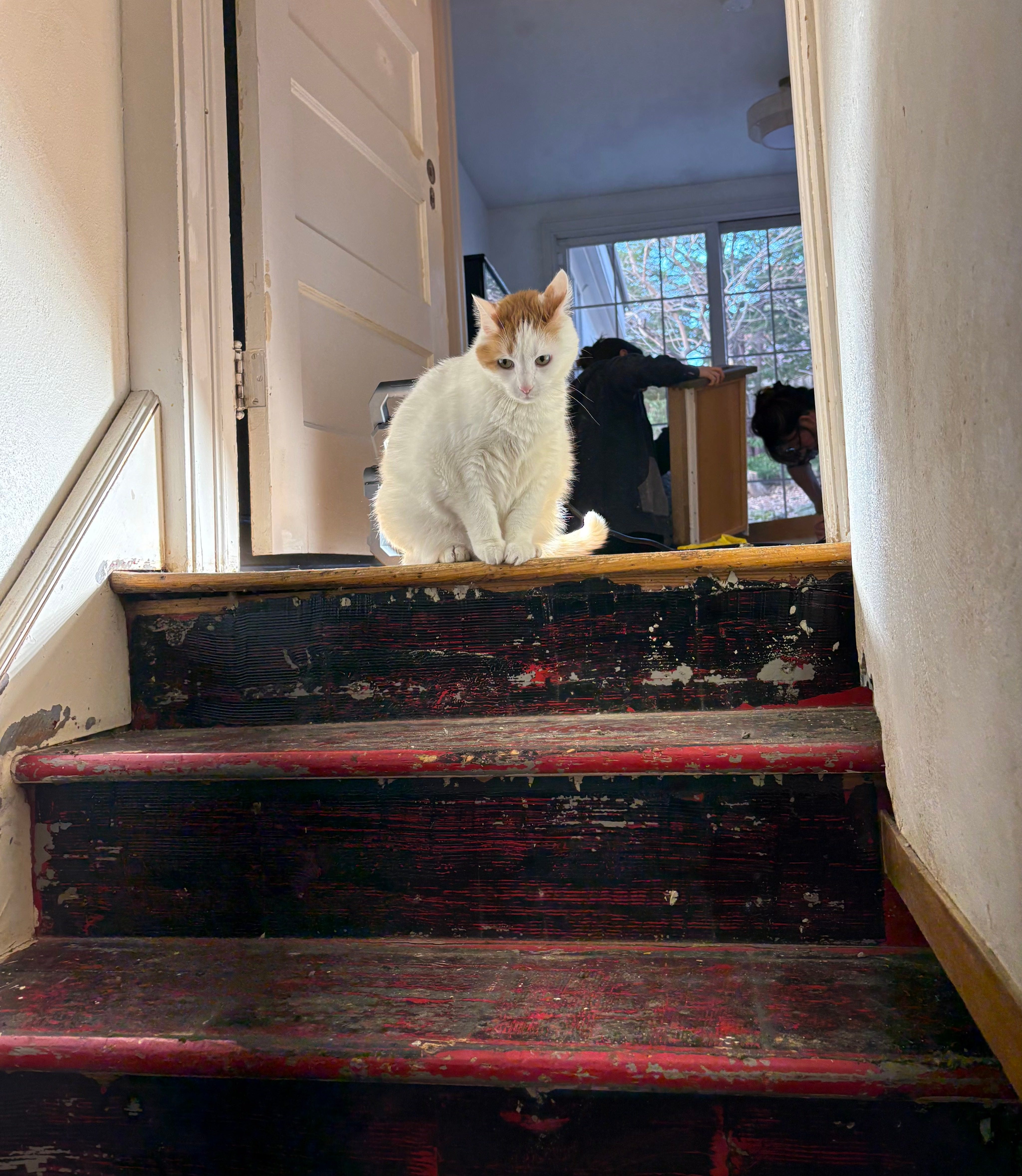
Still, amidst the dust and fatigue, beauty begins to appear in flashes.
A corner of a room finally comes together. Morning light spills across a newly painted baseboard. Brass hardware gleams against cabinetry that I sanded and refinished by hand, imperfectly, yes, but the house doesn’t seem to mind. Around me, it appears to be slowly exhaling, becoming more itself. Me too, perhaps.
This morning, on a walk with my dog, I glimpsed the season making its own quiet argument for patience: forsythia just beginning to flame into yellow, crocuses pushing up through the ground, magnolia buds fattening at the tips of bare branches. Spring, in other words, arriving by increments. Not in a single dramatic reveal, but slowly, unmistakably.
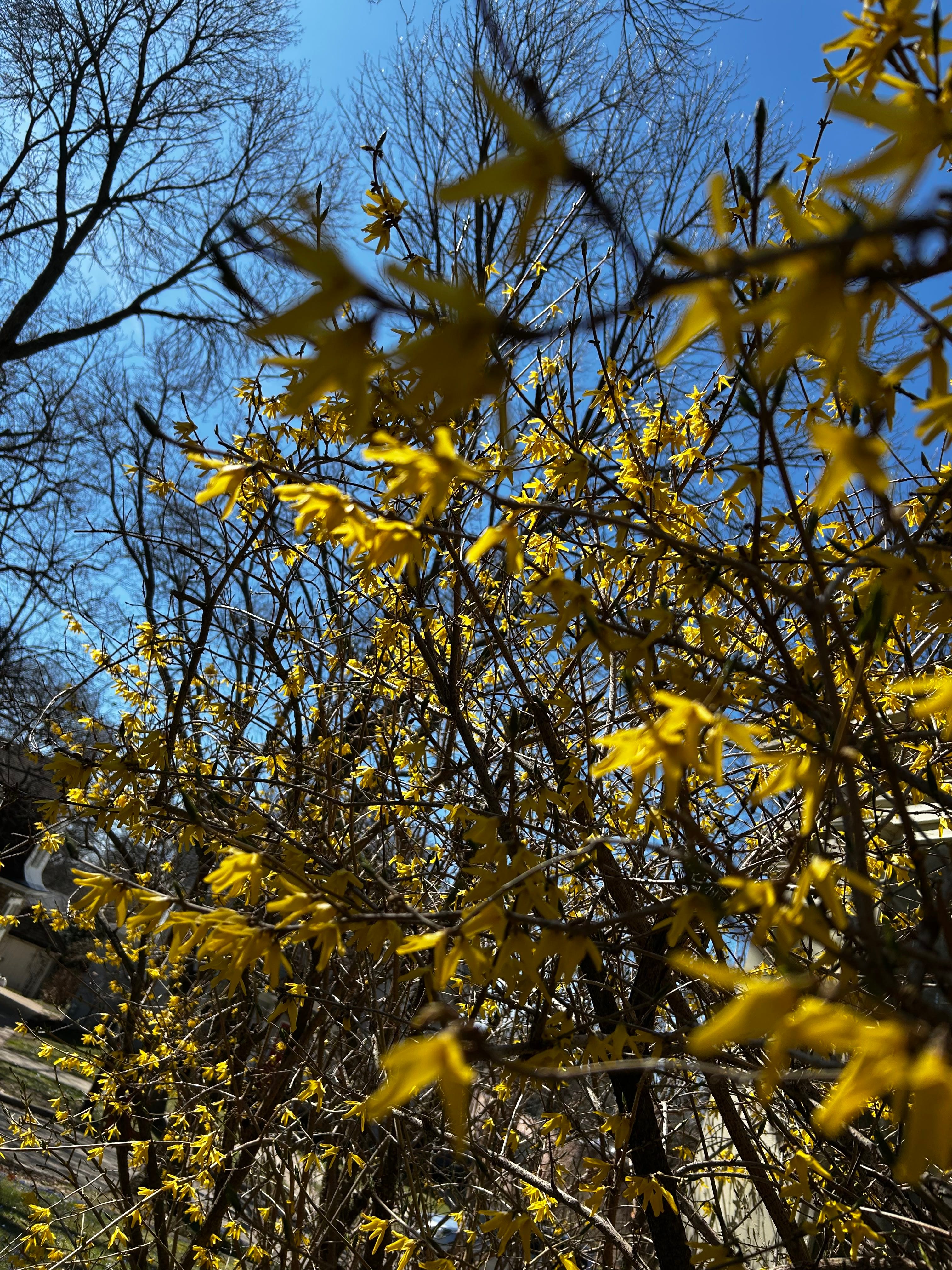
That may be the real after—not perfection, not completion, but emergence.
And right now, that feels like enough.
Yours,
Paula
Yes. Emergence! Bravo to you dearest. I wish I could be there to be part of the long middle.
Metphors of life. Love this.