


Last month, in the space of a single July week, I found myself in or near four different bodies of water: Chestnut Pond in New Hampshire, the open sea and a kettle pond on Cape Cod, and finally Lake Michigan. I had managed to squeeze in a few days each with dear friends before a book event in Petoskey. With work and family obligations, there is never nearly enough time for R&R, it’s true, but occasionally being with the right people, in just the right place, seems to rearrange the principles of physics so that even 24 hours can feel like a week. I can tell you this. When I finally stood at the edge of the lake, salt crystals still in my hair from the Atlantic days before, I understood something had shifted. Summer had finally arrived—not on the calendar, where it had technically started weeks earlier, but from the inside out.
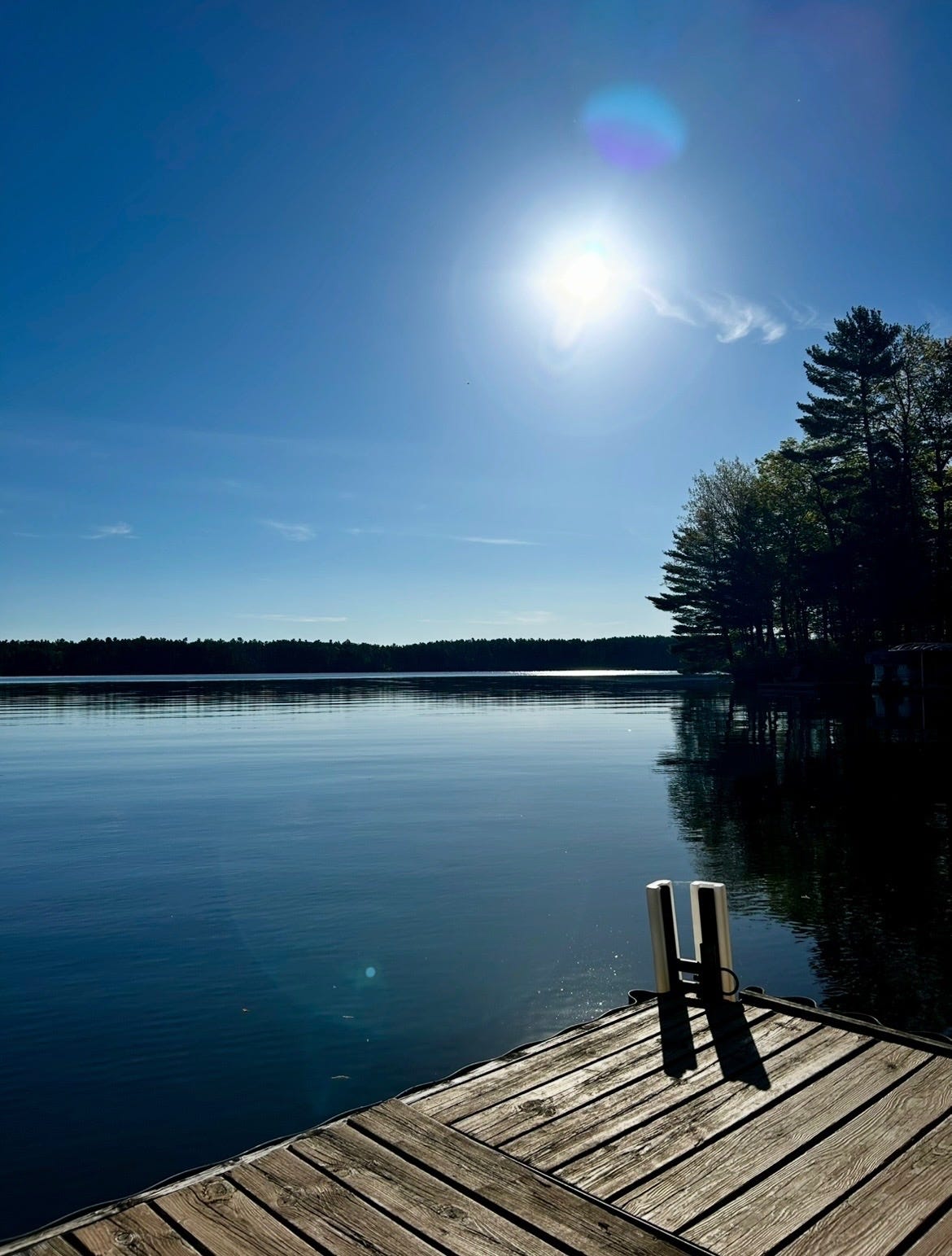
One of the clearest moments came on Chestnut Pond, late afternoon, the water so placid it looked upholstered. I was on a paddleboard, not going anywhere in particular, when a loon surfaced twenty feet away. It ignored me and remained majestically in profile as if stamped on the air itself, sharp beak, ancient red eye—and then it dove, vanishing so cleanly the water barely rippled. I waited and watched. Ten seconds. Thirty. A full minute passed before it resurfaced, impossibly far away, on the other side of the pond, as if it had relocated by will alone.
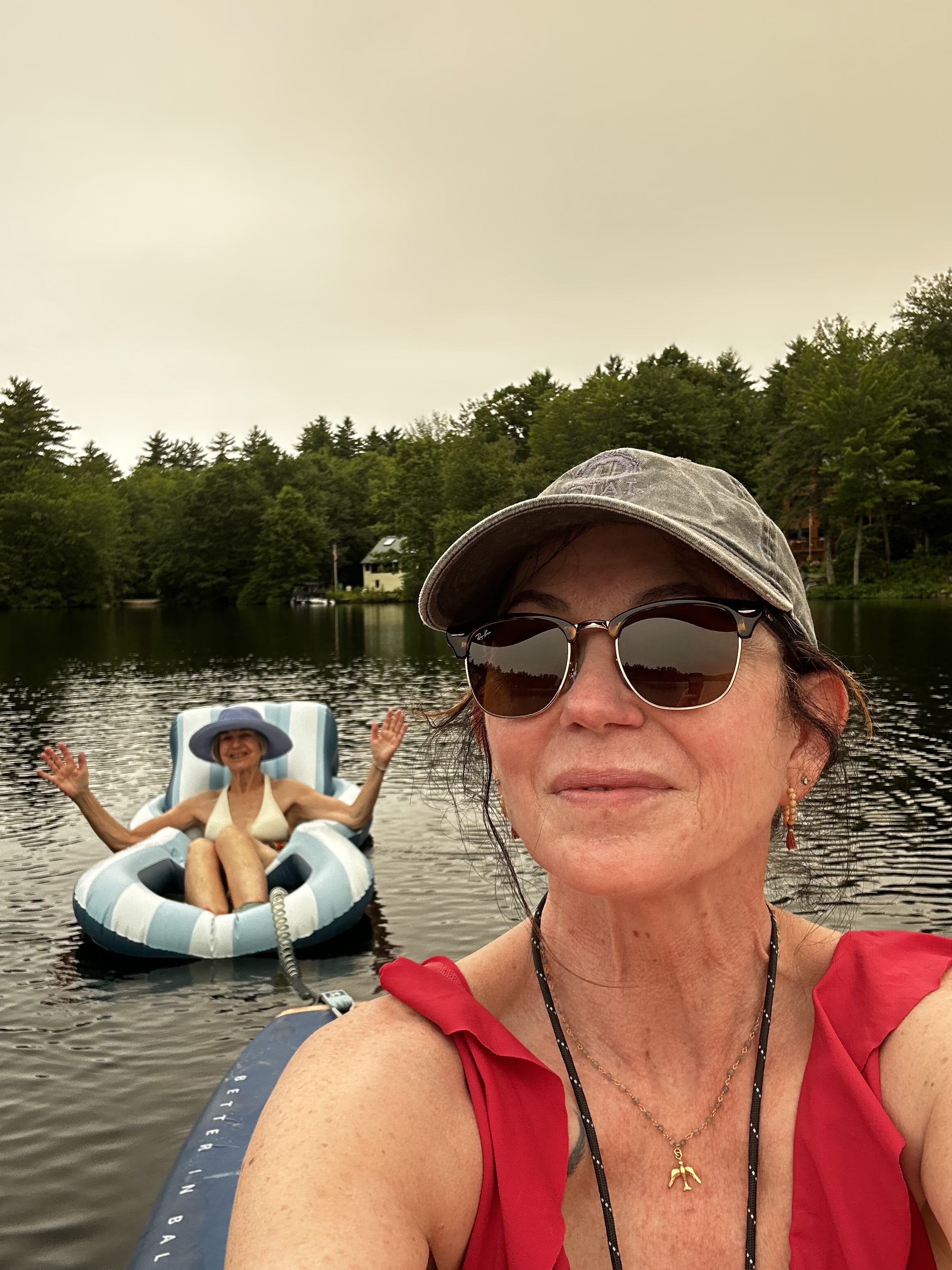
I had been doing a version of the same, I realized. Not vanishing, exactly, but dropping below the surface of whatever noise I’d been carrying and coming up somewhere far calmer. My friend Lori had no TV or WIFI at her cottage. We went to bed at 8:30 (!!) and read. I had brought Ann Patchett’s Whistler, which is beautiful and brilliant, the perfect choice for my own deep dive. After a single night of this, I swear I resurfaced a different person
There’s a name for this phenomenon, I’ve learned. The marine biologist Wallace J. Nichols spent years studying why humans are so reliably, almost helplessly, soothed by water, and he called the resulting state “Blue Mind” a mildly meditative state marked by calm, unity, and a general sense of well-being, brought on by proximity to water, like a built-in relief valve that evolved with the nervous systems, hard wired into us long before we had language for it.
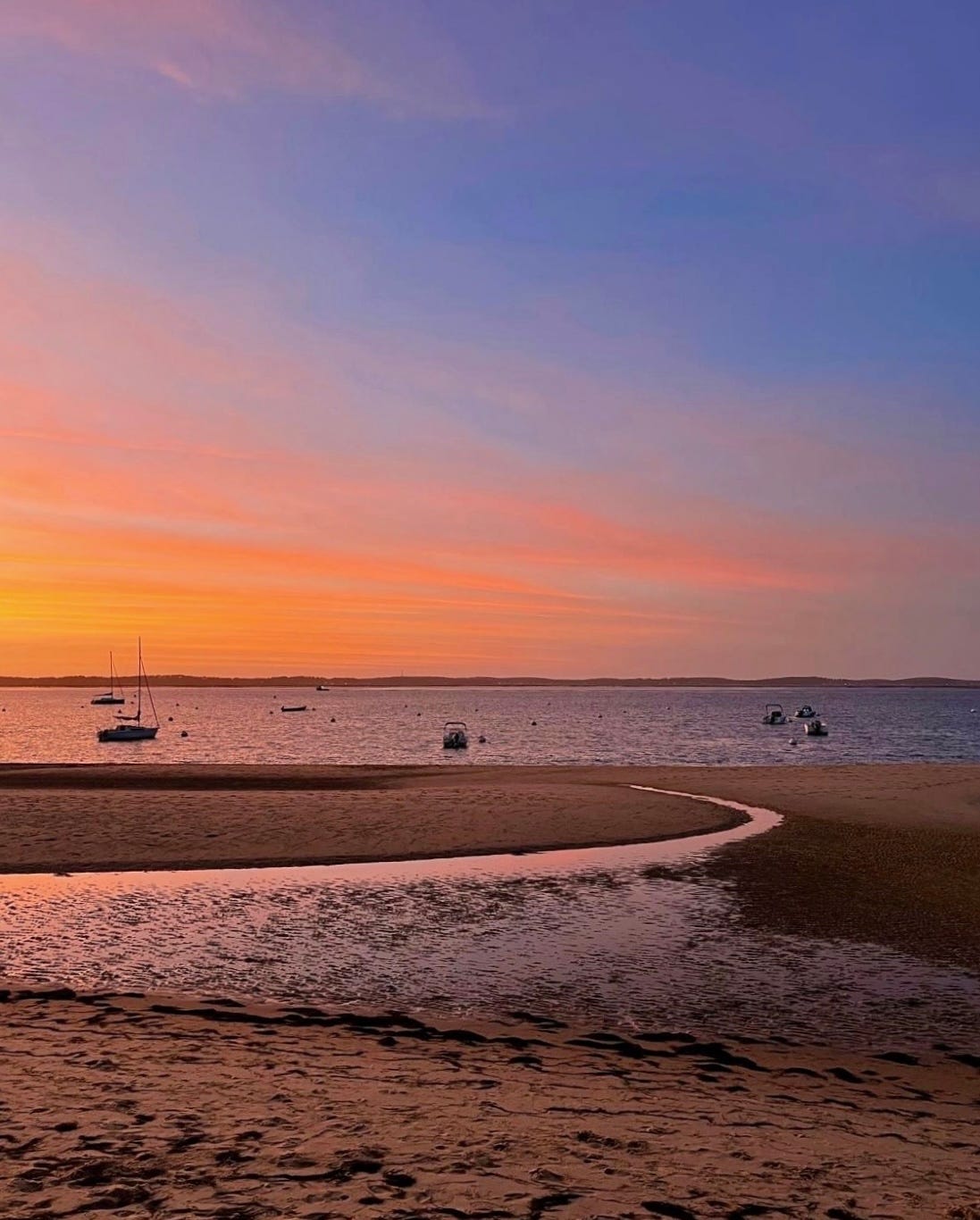
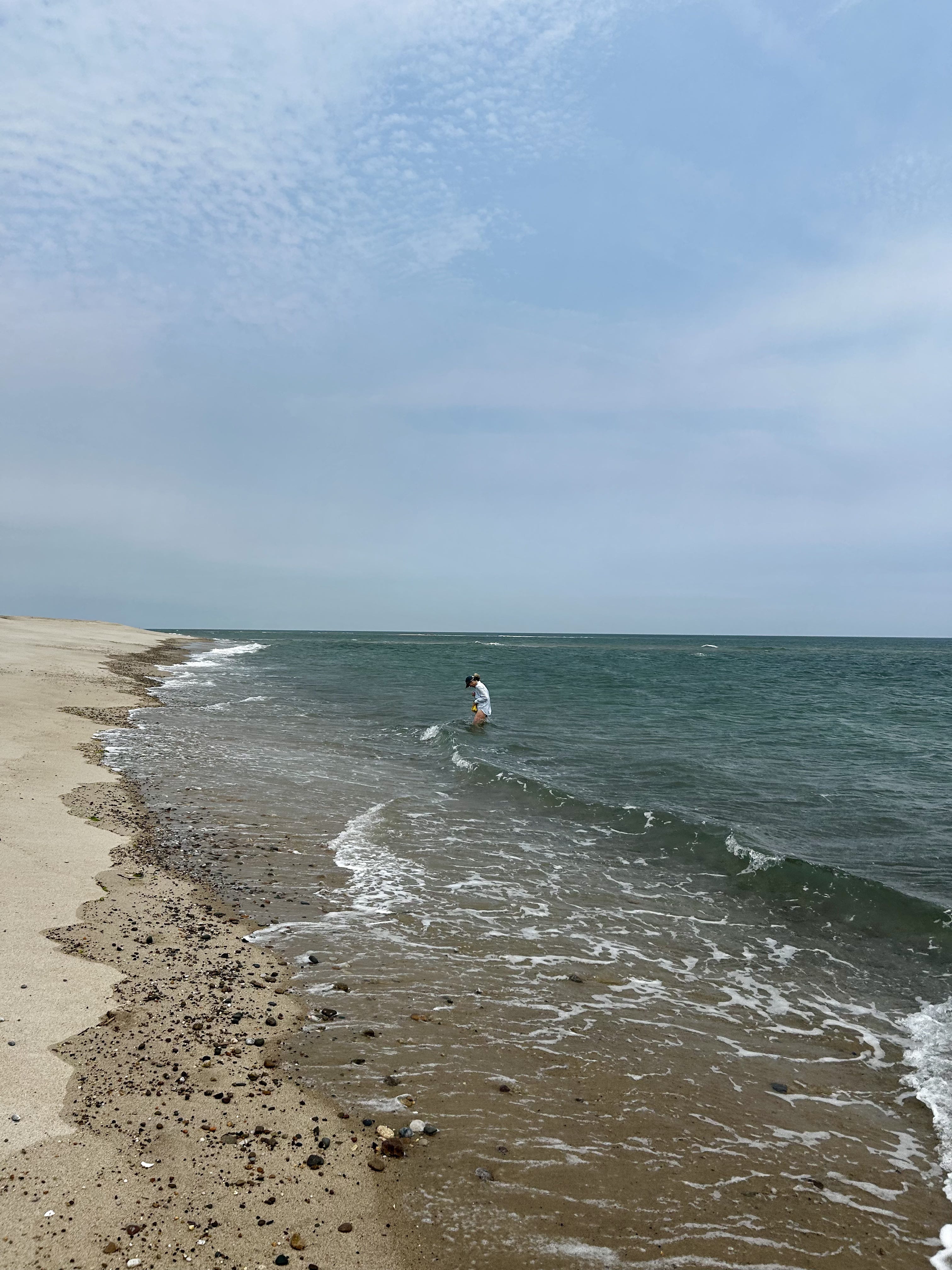
Personally, I don’t need neuroscience to convince me. I only need to remember the loon, or the briny taste of clams on the half shell, eaten raw on the shore, not far from where they’d been pulled from the sea. Or the afternoon swim with my friend Adrienne and her dog Clover in a warm, glassy kettle pond—Clover rolling herself in dirt and pine needles at the water’s edge, her best version of a frosted donut, while we laughed and floated neck-deep without a single thought. That may be the whole point—water as an off-ramp from thinking, a place where the mind can let go of its constant vigilance and just be.
Lake Michigan closed the loop. Standing at its edge, I couldn’t see the other side, which is the party trick of all the Great Lakes, how they mimic the ocean right down to the whitecaps and wheeling gulls. I stood there, watching the small waves do their percussive, repetitive, timeless dance, and I thought: I have been chasing this feeling my whole life without knowing its name.
Because long before Chestnut Pond or Cape Cod, there was Millerton Lake, outside Fresno, where I grew up. Summers there were not gentle. They were scorching, relentless things, months strung together above a hundred degrees, the kind of heat that turns the air into an anvil. Some evenings, after dinner, the foster family we lived with would pile into the truck and drive out to the lake, chasing the last hour of daylight. I remember the boat dock, sun-warped and splintery underfoot, and the running leap off the end of it into water green and cool. Velvet is the only word I have for it. I remember tiny bluegill nibbling at my ankles and elbows while I floated, and how instead of being annoying or gross, the nibbles felt almost tender, even ministering.
I didn’t have even an inkling of “Blue Mind” as a term then. I had only the fact of it: how the lake could undo the most scorching August day. Something in me has longed for and chased that sense of reversal ever since—from Mendocino to Malta, Anguilla to Arcachon. The geography can flip upside down, but the relief doesn’t change an iota.
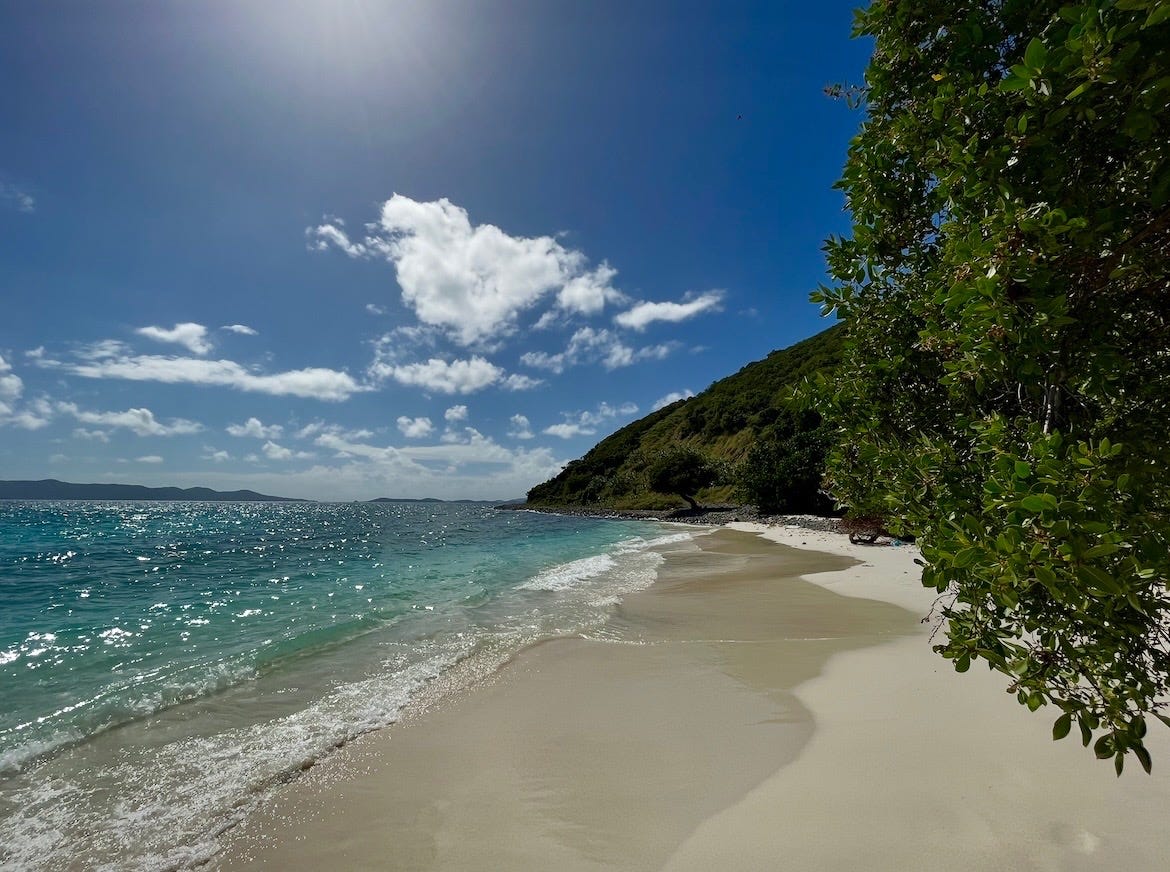
I don’t think I’m unusual in this particular pilgrimage. I would wager that most of us are quietly water-seeking, whether we call it Blue Mind or nothing at all—drawn to the coast on vacation, to the lake house, the pool, a soak in the tub at the end of a long week. Water seems to hold us effortlessly, and even to want to take our pain, no questions asked. By the time I left Lake Michigan, summer had finally taken hold the way it’s supposed to—as a feeling in the body, water-shaped, patient, and a little bit like being nibbled at by bluegill: small, specific proof that I had, in fact, arrived.
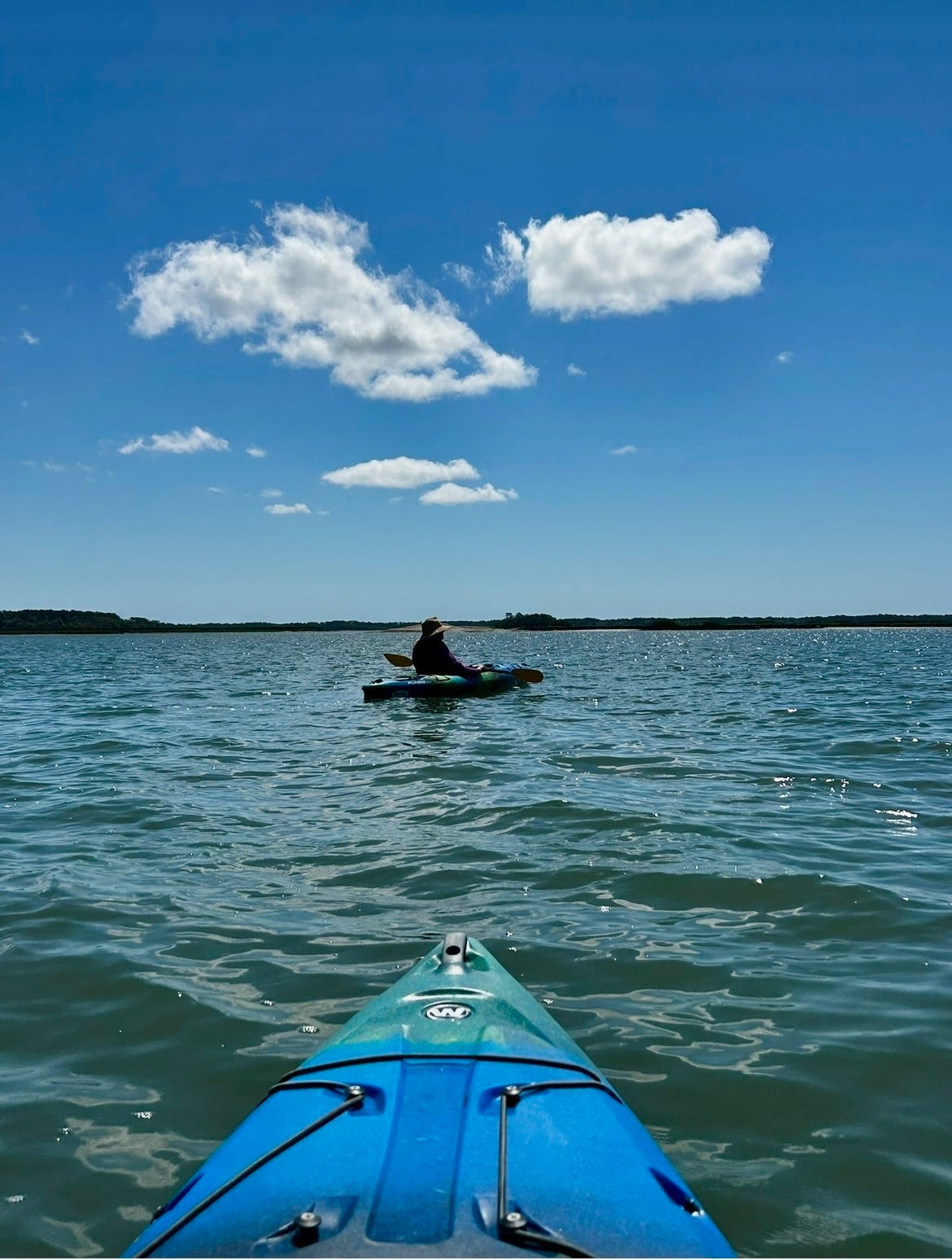
Where does water find you? A childhood lake, a favorite coastline, a long bath with candles—I’d love to hear where your own Blue Mind lives.
Yours,
Paula
This is balm for the soul, Paula, especially this year, when the arrival of a beautiful wee family member precluded our annual pilgrimage to the shores of the Atlantic in southern NJ. Loving the baby but also thirsting for saltwater.
What a great reminder that we need quality time with others, not quantity of time. A body of water can truly cleanse our soul.